



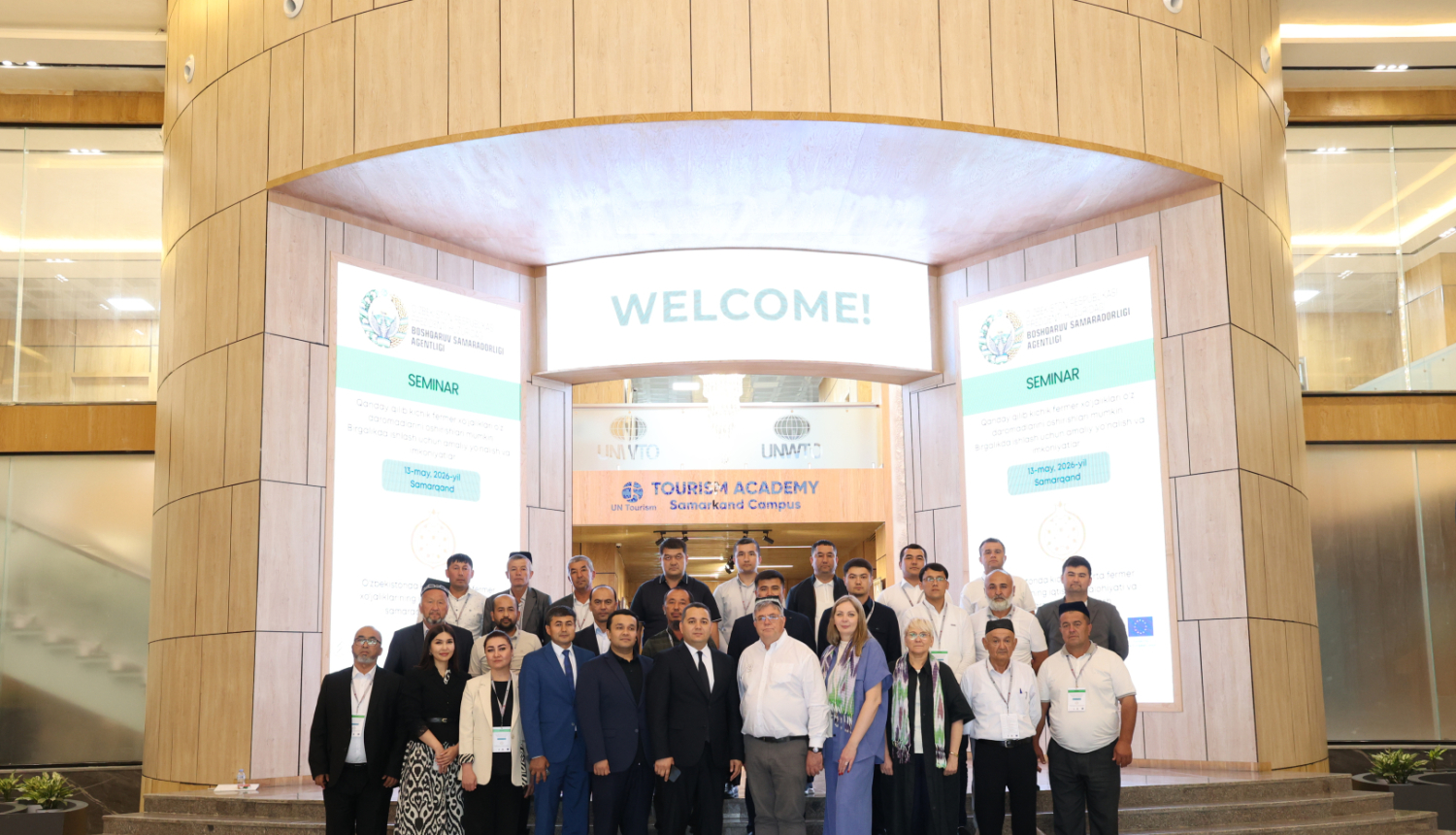
From May 12 to 15, 2026, a visit to Uzbekistan took place within the framework of the project “Strengthening the economic capacity and efficiency of small and medium-sized farmers in Uzbekistan.” The Latvian delegation, composed of representatives from the Latvian Rural Advisory and Training Centre (LLKC) and the Central Finance and Contracting Agency (CFLA), visited the country.
The first workshop for local farmers was held in Samarkand, focusing on how cooperation and working within cooperatives can help strengthen the economic resilience of farms and improve their standard of living. More than 20 farmers from the Samarkand region participated in the event, engaging in active discussions with the experts on practical challenges such as price fluctuations, market access, costs, and the benefits of collaborative work. Workshop participants showed great interest in engaging with the project. LLKC specialists Edgars Linde and Liene Feldmane shared Latvia's experience in establishing cooperatives, highlighting practical solutions for strengthening agricultural holdings.
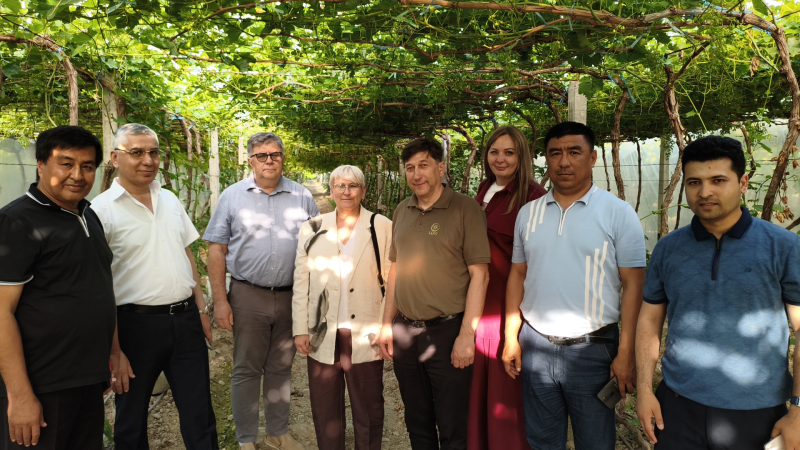
As the visit continued, the delegation gained on-site insights into the situation in the Andijan and Fergana regions. The experts visited various agricultural sites, including fruit-growing, vegetable-growing, and greenhouse farms, as well as export-oriented enterprises. Meetings were also held with regional local government representatives to discuss cooperation opportunities and support mechanisms for farmers. The visit was organized by the Ministry of Employment and Poverty Reduction of Uzbekistan, the International Institute of Central Asia, and the Embassy of the Republic of Latvia in Uzbekistan.
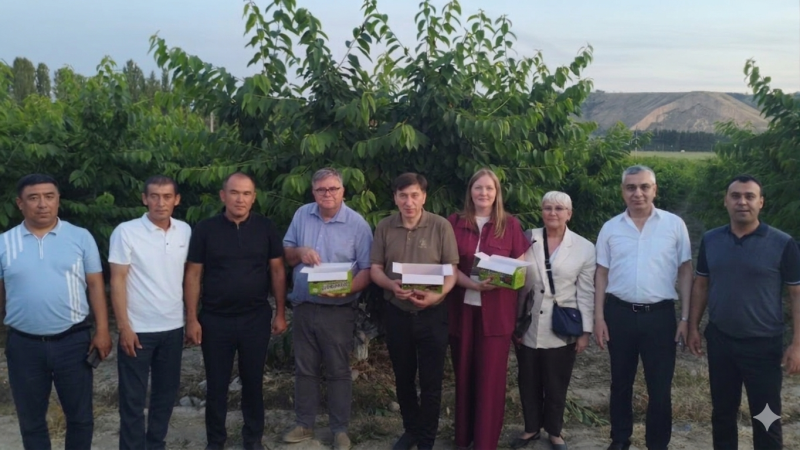
This visit has laid the groundwork for the next steps—selecting the regions where the project's primary goal will be implemented: establishing viable agricultural cooperatives. In total, the project aims to establish three cooperatives, one in each selected region.
The Latvian delegation concluded that Uzbekistan has significantly developed its agricultural sector in recent years by introducing modern technologies, adapting crop varieties, and improving logistics chains. It was also noted that local farmers are actively utilizing the opportunities and state support provided by the new Law on Agricultural Cooperatives, including subsidies for product packaging and storage.
The project is funded by the European Union and implemented by the Central Finance and Contracting Agency of Latvia (CFCA) in cooperation with the Latvian Rural Advisory and Training Centre (LRATC).