


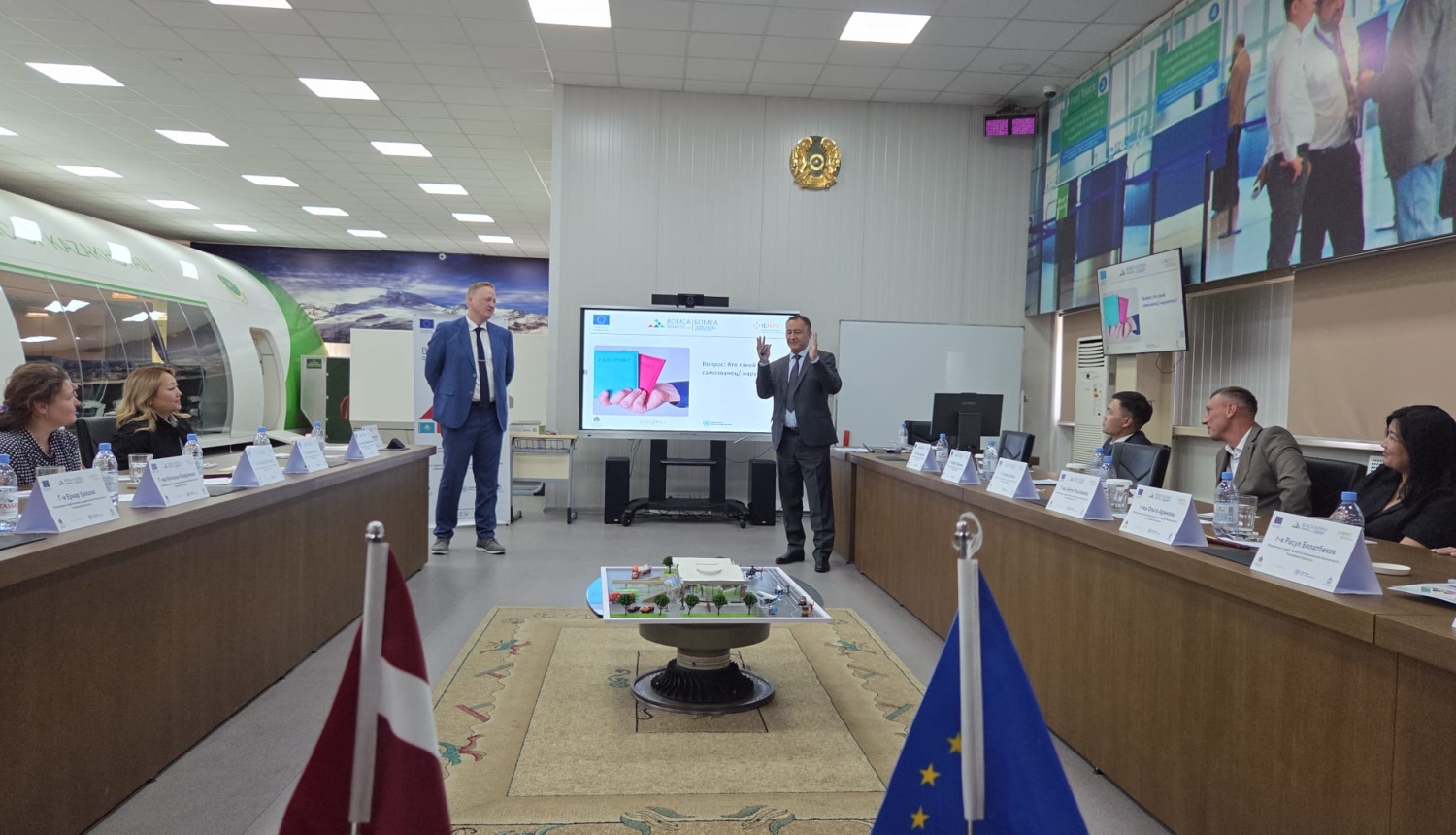
From 14 to 18 July, a five-day national Training of Trainers (ToT) “Traveller Identification” is taking place in Almaty, Kazakhstan, within the framework of the European Union-funded BOMCA 11 programme. The activity is implemented by CFCA as the coordinator of Component 1 of the project.
BOMCA 11, the Border Management Programme in Central Asia, aims to strengthen regional cross-border cooperation, combat organized crime, and introduce safer and more efficient border procedures, while respecting human rights and the principles of integrated border management.
The training brings together representatives of the Border Service of the National Security Committee of the Republic of Kazakhstan. The aim of the seminar is to prepare national trainers who will later be able to transfer knowledge to specialists working at border crossing points on identifying persons through travel documents, detecting impostors, comparing faces, applying document-checking methods, and recognizing risks related to modern digital manipulation techniques, including morphing and composite images.
The training is delivered by a CFCA representative and Component 1 Coordinator in Central Asia, in cooperation with an expert from the State Border Guard of the Republic of Latvia and an expert from the Border Service of Kazakhstan. The programme is based on a Frontex course adapted to the Central Asian and Kazakhstani context, combining theoretical sessions, practical exercises, knowledge tests and a final assessment.
Through this activity, CFCA contributes to the sustainable strengthening of the capacity of border guard institutions and to the transfer of Latvian expertise to Central Asian partners.